Rough Country Trails
Guided adventure experiences designed for confidence, challenge, and connection.
Rough Country Trails is a concept UX/UI and brand experience project for an outfitter and guide company that helps individuals and teams discover, evaluate, and book guided expeditions on some of the most remote and demanding trails. The digital experience focuses on balancing rugged exploration with clarity, safety, and trust—ensuring users feel informed and prepared before committing to an adventure.
Role: UX/UI Designer, Brand Designer
Project Type: Concept Digital Product & Brand Experience
Audience: Individual adventurers, outdoor enthusiasts, and corporate teams
The Problem
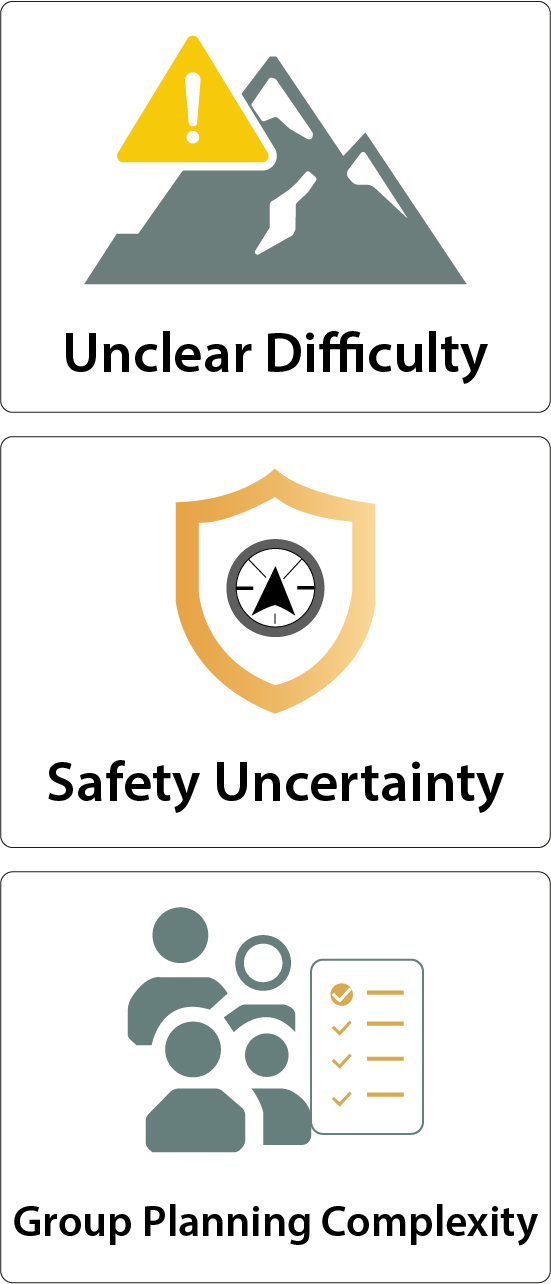
Planning a remote outdoor adventure is intimidating. Users often struggle to understand trail difficulty, required experience, safety expectations, and whether an expedition is appropriate for their skill level or group type. Existing adventure sites frequently rely on inspirational imagery without providing the structured information needed to make confident decisions.
For corporate teams, the challenge is even greater, balancing adventure with safety, logistics, and group coordination. Without clear guidance, users may abandon the experience or hesitate to commit.
User Needs
Clear indicators of trail difficulty and terrain
Transparency around preparation, equipment, and expectations
Easy comparison between individual and group experiences
Reassurance around safety, expertise, and guidance
UX Strategy & Approach
The UX strategy for Rough Country Trails focuses on helping users move from inspiration to confident commitment. The experience is designed to reveal information progressively, allowing users to explore adventures visually while accessing structured details as needed.
Rather than overwhelming users up front, the interface guides them through discovery, evaluation, and preparation, ensuring clarity about difficulty, safety, and group suitability at each stage of the journey.
Key UX Principles
Progressive Disclosure
Information is revealed in layers, starting with high-level inspiration and moving toward detailed logistics, preparation, and expectations.
Decision Support
Visual indicators, tags, and structured layouts help users assess whether an experience matches their skill level, comfort, and goals.
Trust Through Transparency
Clear communication about safety, guidance, and requirements builds confidence and reduces hesitation before booking.
Dual-Audience Support
The experience accommodates both individual adventurers and group or corporate users without forcing them down the same path.

Trail difficulty, terrain, group size, and expectations are clearly communicated using visual indicators and structured information, allowing users to assess suitability with confidence.
Users are invited to explore available adventures through immersive visuals and clear categorization, helping them quickly understand what experiences are offered without overwhelming detail.
Preparation details such as required gear, physical readiness, and safety considerations are surfaced at the right moment to reduce uncertainty and support informed decision-making.
Clear next steps guide users toward booking or inquiry, reinforcing trust through transparency, expertise, and reassurance before commitment.
Information Architecture
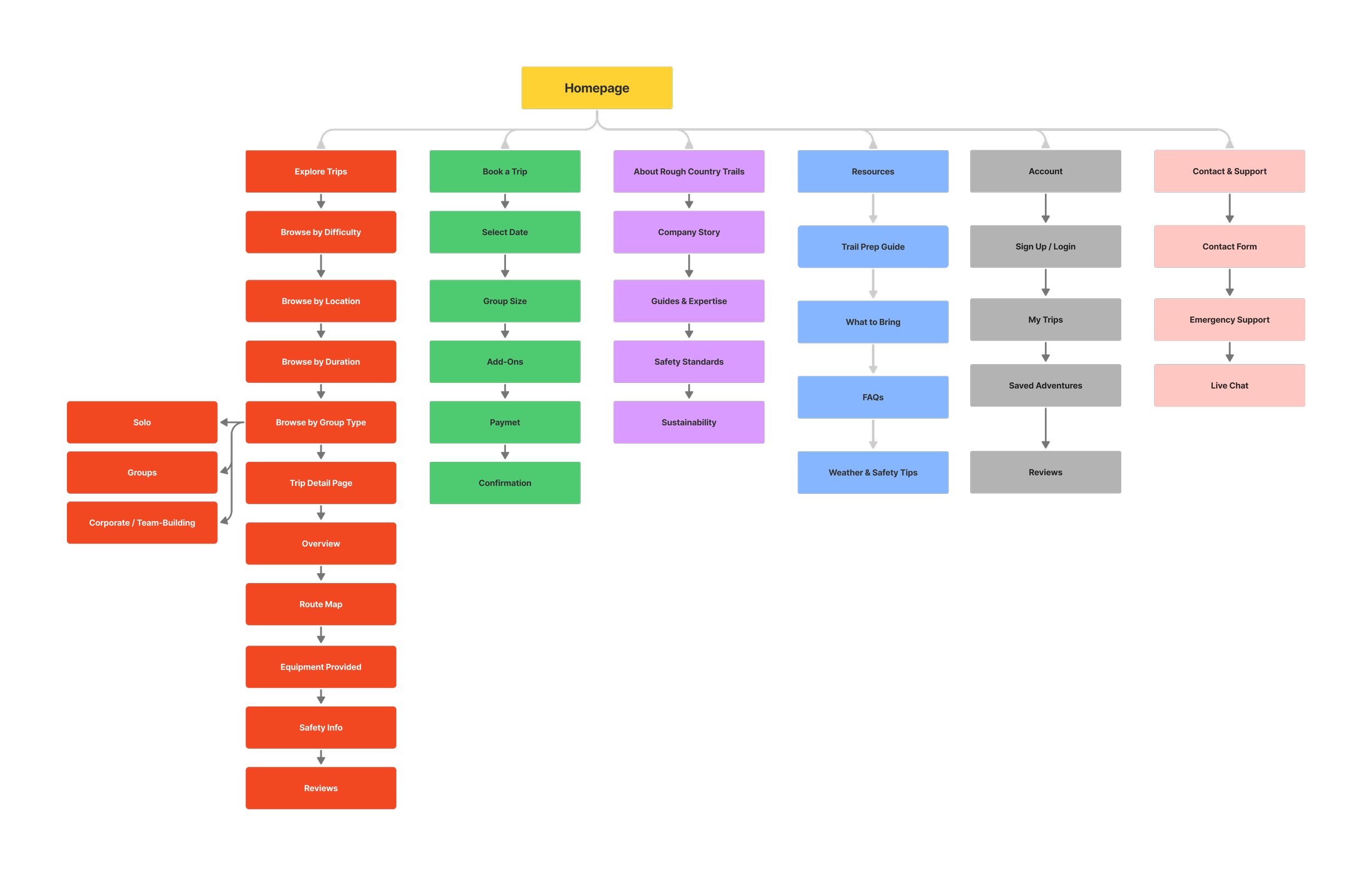
The Rough Country Trails digital experience is structured to support confident decision-making for high-effort outdoor adventures. Information is organized to surface inspiration first, followed by clear evaluation details and preparation guidance before prompting commitment.
The architecture prioritizes clarity, progression, and safety—ensuring users can quickly find what they need without feeling overwhelmed.
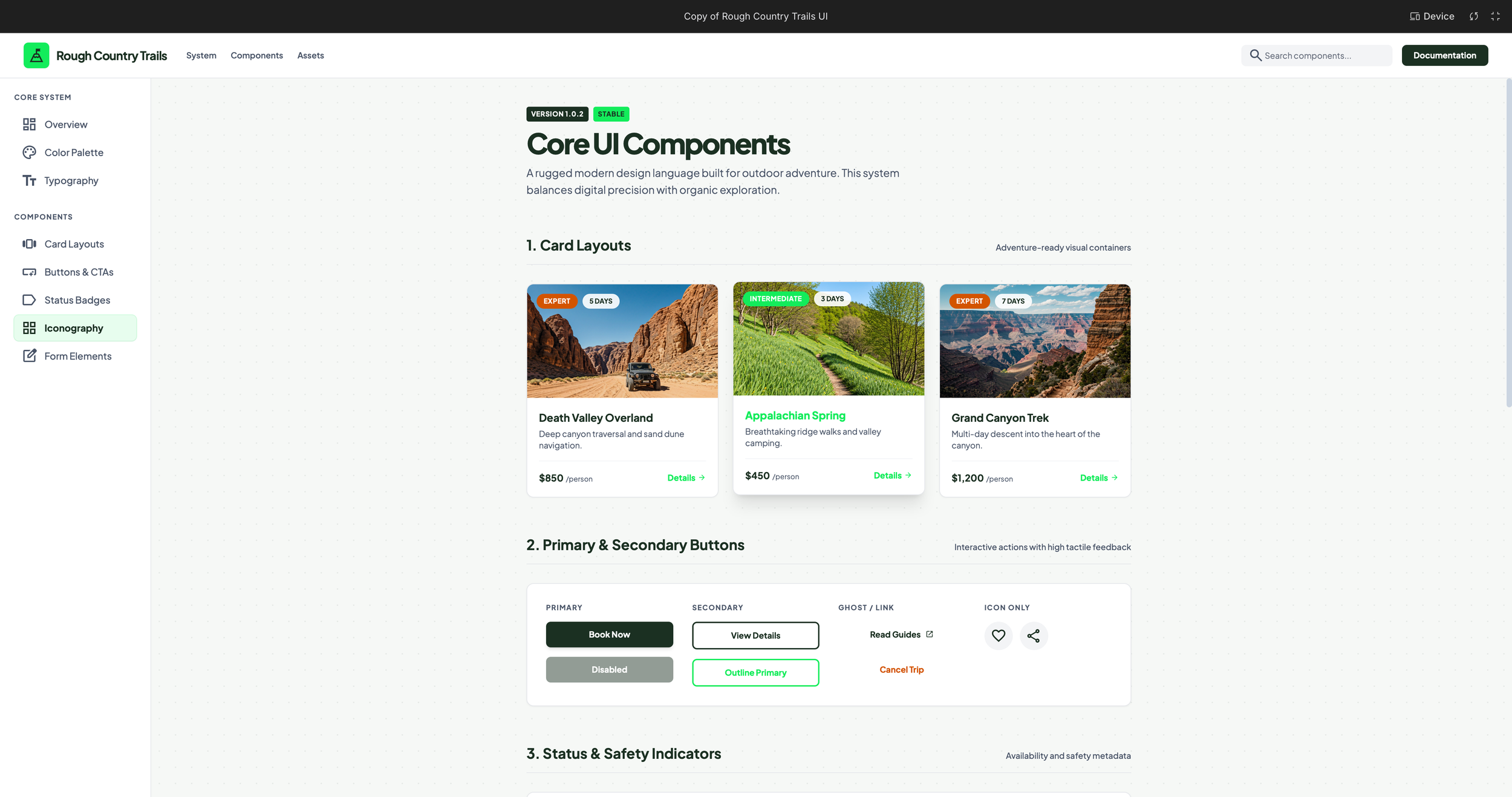
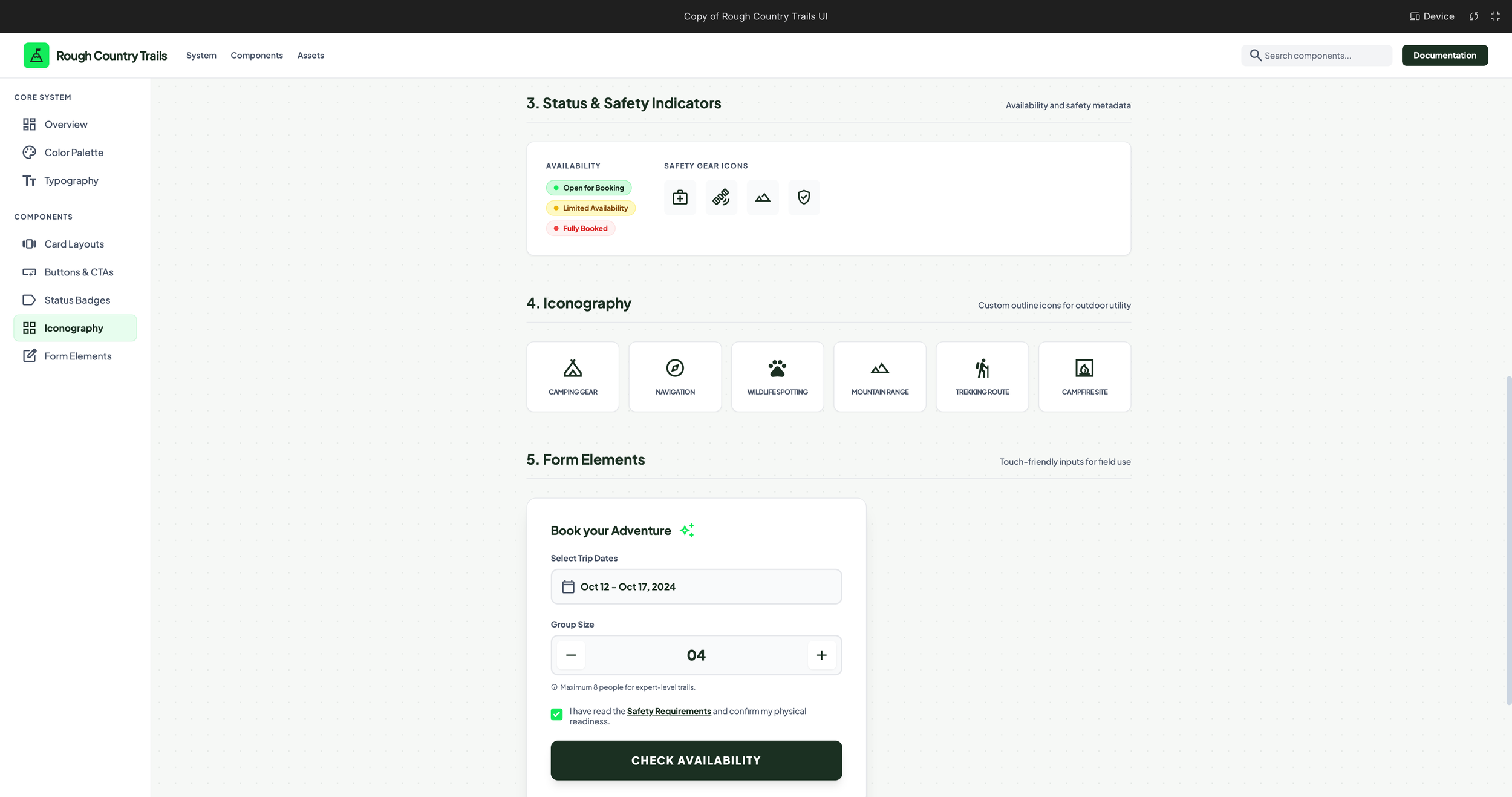
Core UI Components
This step defines the reusable interface elements that power the Rough Country Trails experience across web and mobile. These components are designed to balance rugged outdoor aesthetics with modern usability and clarity.